
While commercial travelers navigate security mazes, private flyers experience a radically different reality. Instead of arriving hours early, passengers drive directly to a Fixed Base Operator (FBO)—a private terminal designed for efficiency—often boarding within 15 minutes. Industry data suggests this streamlined flow saves an average of four hours per domestic trip, turning travel into a valuable time-management tool.
Once airborne, the focus shifts to physiological comfort through a concept known as cabin altitude. By keeping interior air pressure closer to sea level than commercial airliners, these jets increase oxygen saturation for passengers. Medical research indicates this technology significantly reduces fatigue, allowing travelers to land feeling alert rather than drained.
Beyond the logistics lies a design world rivaling luxury real estate. From panoramic cockpit views to bespoke interiors, superior engineering and craftsmanship define these standout aircraft.
From ‘Hops’ to ‘Hauls’: How to Choose the Right Jet Based on Your Mission
Selecting an aircraft isn’t just about picking the coolest private jets; it is about matching the machine to the specific mission. Just as you wouldn’t drive a moving van to pick up groceries, industry veterans know you shouldn’t charter a massive intercontinental aircraft for a forty-minute hop to a neighboring city. The private aviation world organizes these aircraft by “class,” which is essentially a shorthand for how far they can fly and how many people they can carry comfortably.
For regional trips, the choice often comes down to turboprops versus light jets. While turboprops utilize propellers and fly at lower speeds, they are incredibly efficient for accessing short runways at remote airports. However, when speed is the priority, light jet performance shines on trips under three hours. Aircraft like the Embraer Phenom 300 act as the sports cars of the sky—agile and perfect for zipping a small team to a meeting and back in a single day.
To help visualize the hierarchy, consider these general capabilities:
- Light Jets: Ideal for 4–6 passengers covering up to 2,000 miles (e.g., Los Angeles to Seattle).
- Midsize Jets: Built for coast-to-coast comfort, handling 7–9 passengers with a range of roughly 3,000 miles.
- Ultra-Long-Range: The heavy hitters capable of flying 12+ hours non-stop with 13–16 passengers.

When the mission involves crossing oceans, size becomes a necessity rather than a luxury. Giants like the Bombardier Global 8000 or the Gulfstream G700 offer maximum flight range, allowing passengers to fly from New York to Tokyo without stopping for fuel. These flying apartments are engineered not just for distance, but to actively combat the physical toll of long-haul travel.
Why 40,000 Feet Feels Like Sea Level: The Engineering Secrets of Private Jet Interiors
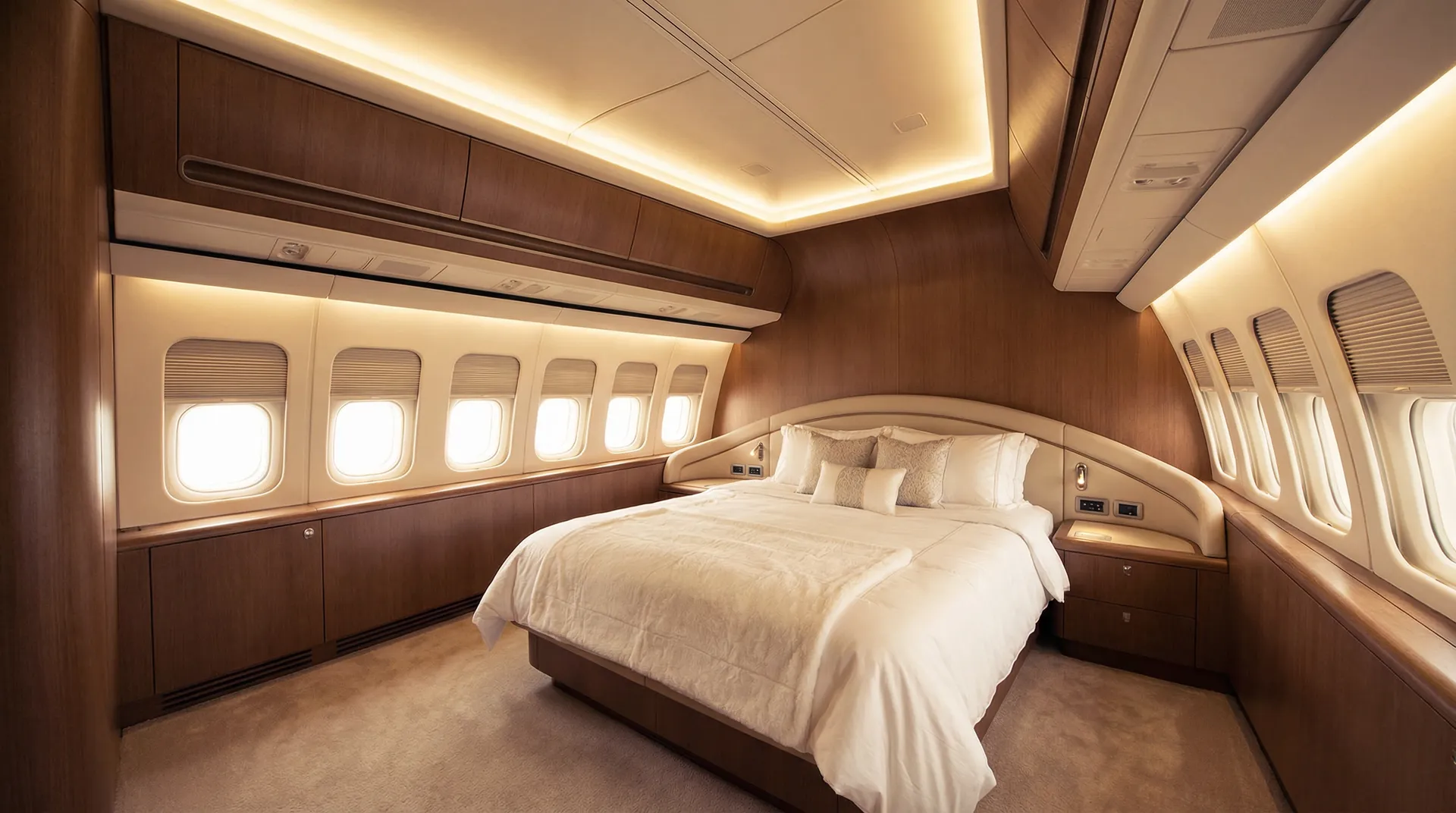
While commercial airlines focus on packing the maximum number of seats into a tube, private jet interiors are designed around how you live. These cabins serve as canvases for bespoke inflight concierge experiences, allowing owners to swap standard seating for dedicated bedrooms or formal dining areas. This flexibility in aircraft configurations means you aren’t just sitting in a plane; you are relaxing in a flying extension of your home or office.
Fatigue after a flight is often blamed on time zones, but the real culprits are usually dehydration and cabin pressure. Unlike the recycled air found on commercial liners, high-end private aircraft pump 100% fresh air into the cabin every two minutes. Engineers also pressurize the interior to simulate a lower altitude—often around 3,000 to 4,000 feet—drastically reducing the physical strain on your body so you arrive ready for a meeting rather than a nap.
Silence represents the ultimate luxury in a fancy aircraft interior, achieved through advanced acoustic engineering. Manufacturers layer proprietary sound-dampening materials within the walls to block out engine roar, lowering ambient noise to the volume of a quiet library conversation. This technological sophistication isn’t limited to the passengers, however; just behind the cockpit door, pilots utilize equally impressive digital tools to navigate the skies.
Glass Cockpits and Synthetic Vision: What Really Happens in the Front Office
If you were to peek into the flight deck of a modern jet, you wouldn’t find the confusing clutter of analog dials seen in older movies. Today’s “glass cockpit” resembles a high-end Tesla dashboard, dominated by sleek touchscreens powered by avionics giants like Honeywell and Garmin. This shift isn’t just aesthetic; it organizes complex flight data into intuitive layouts, reducing mental strain so pilots can focus on decision-making rather than deciphering gauges.
The most striking capability displayed on these screens is Synthetic Vision, a technology that essentially gives pilots X-ray eyes. When flying at night or through thick fog where visibility is near zero, this system generates a 3D virtual landscape of the terrain ahead—mountains, runways, and obstacles—on the display. It transforms a terrifying gray window into a clear, digital path home, ensuring private jet safety is maintained regardless of the elements outside.
Despite this automation, the human requirement remains rigorous; pilots must earn a specific “Type Rating” for every distinct jet model they fly, mastering its unique systems through weeks of specialized training. While you relax in the fancy aircraft interior, cockpit crews are utilizing these tools to adhere to strict safety protocols, ensuring you arrive ready to navigate the complex financial logistics of flying private.

The ‘Uber’ of the Sky vs. True Ownership: Navigating Charter, Fractional, and Empty Legs
Buying a whole aircraft involves complex logistics and massive upfront costs, so most newcomers start elsewhere. Industry experts often cite the “50-hour rule”: if you fly less than 50 hours a year, it makes financial sense to stick to on-demand chartering or jet card membership rather than ownership. This approach allows you to essentially “rent” the lifestyle without the headache of managing a flight crew or maintenance schedule.
Finding the right fit depends largely on your frequency of travel and commitment level:
- Charter: Pay-as-you-go per trip, similar to ride-sharing, and ideal for occasional flyers learning how to book a private jet charter.
- Jet Cards: Prepaid blocks of 25+ hours that lock in hourly rates and guarantee availability.
- Fractional: A “timeshare” model where you buy a slice of a specific plane (e.g., 1/16th) for 50+ annual hours, bridging the gap between fractional ownership vs whole aircraft purchase.
For those seeking value, the industry’s best-kept secret is the “empty leg.” When a jet drops passengers off in Miami and must return to New York empty, operators sell that repositioning flight at significant discounts, making finding empty leg flight deals a sport for flexible travelers. Whether you own the asset and hire an aircraft management company to handle the details or simply book a seat via an app, the next step is mastering the arrival experience.
Your First Private Flight: Mastering the FBO and the ‘Drive-to-Plane’ Lifestyle
Understanding private aviation shifts your perspective from seeing a status symbol to recognizing a powerful tool for reclaiming time. The true luxury isn’t just the cabin comfort, but the mental energy saved by bypassing commercial chaos. Whether considering executive travel for business or leisure, the real value lies in arriving completely refreshed.
To make your debut smooth, concentrate on the logistics. Confirm your list of passengers in advance, let us know your catering choices, and have ID ready for quick private terminal customs checks. Understanding the FBO process is straightforward; after handling these details, you can enjoy a trip marked by total freedom. Reach out to us for personalized guidance. As your trusted partner in private aviation, we help select the perfect aircraft to suit your lifestyle and maintain top safety standards.


